

What we do
How we work
Success stories
Who we are
Insights & news
Careers
Contact us
insights & news > Insights

Last year, I predicted XR would go mainstream in 2025. The timeline proved optimistic, but the underlying trajectory hasn’t changed. XR is not mainstream yet, but the signals are no longer abstract. Google is entering the market, prices are dropping, devices are getting lighter, and real ecosystems are forming. History shows that the most valuable positions are taken before the numbers add up. Therefore, I believe the real question today is not whether XR will matter but which decisions are worth making early.
XR will not reach the mainstream because devices suddenly become perfect. It will get there through the right content, the right business models, and the right partnerships, long before the audience reaches mass scale.
For executives in the video industry, it is imperative to understand that your decisions today will shape future costs, speed to market, and strategic optionality.
XR will scale through content, business models, and partnerships, not hardware alone.
Before choosing devices or formats, the first decision is strategic. What role should XR play for your organization?
For video and media companies, XR can take several distinct and very concrete roles.
For some, XR will become a new premium content pillar, focused on immersive sports, music, or live events that bring fans closer than traditional broadcasts ever could. These experiences are not designed for mass reach on day one, but for depth, differentiation, and willingness to pay.
For others, XR works best as a premium extension of existing services. An additional layer that enhances flagship content, strengthens fan engagement, and creates new upsell opportunities without replacing core platforms.
For many organizations, the most realistic and valuable role is as a structured learning track. A way to build internal expertise, test formats, validate partnerships, and understand audiences before scale arrives. This role is often underestimated, yet it is the one that most consistently leads to long term success.
What matters is making this choice explicit. Doing nothing is also a decision, but it does not come without consequences. In emerging platforms, learning compounds over time. Arriving late often means needing more time to catch up, missing early opportunities, or paying a premium for ready made solutions built by those who started earlier. The companies that benefit most from XR will not be the fastest to scale, but the ones that decide early why they are in XR and start learning with intent.
The biggest risk with XR is not moving too early, but losing the ability to decide on your own terms later.
One of the most common early mistakes in XR is treating all head worn devices as the same platform. They are not.
AI glasses and XR headsets represent two fundamentally different value propositions.
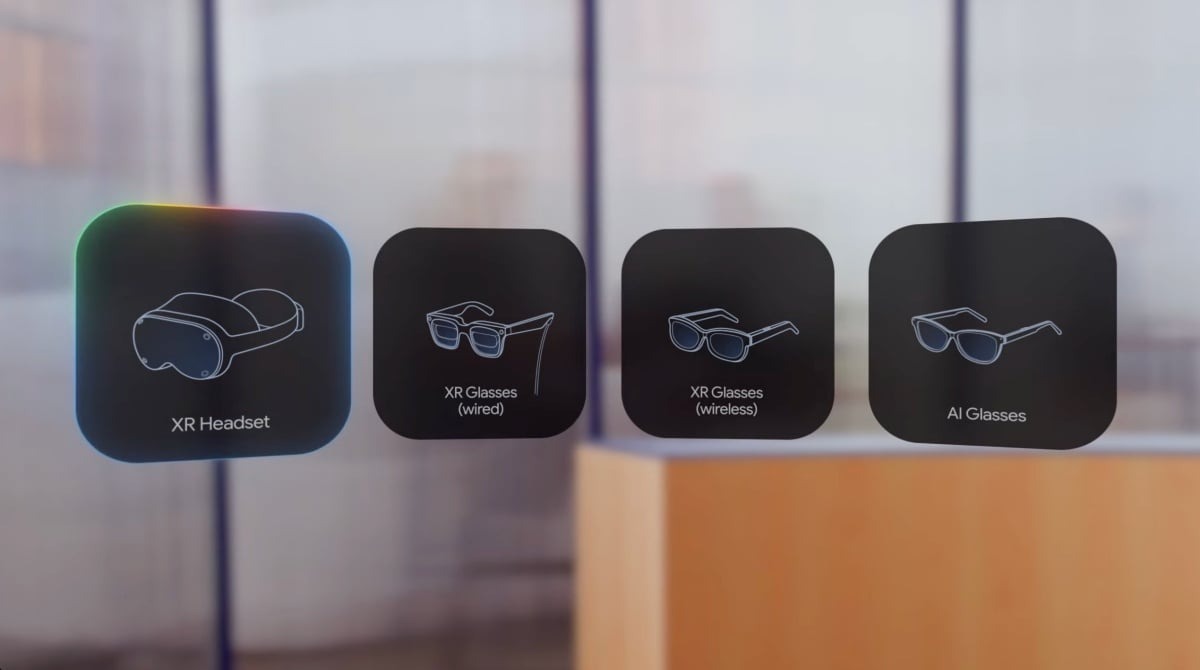
AI glasses focus on habit, desirability, and everyday light usage. Sessions are short and casual. Use cases include short form video, contextual overlays on top of TV viewing, and AI assistants that help users follow a match, surface statistics, ask questions, or get context through a conversational interface. These experiences complement existing video consumption rather than replacing it.
XR headsets are built for intentional moments. They are about presence, immersion, and premium fan experiences. Immersive video shines when it creates the feeling of being inside an event or inside a story.
The difference is similar to watching a movie on TV versus consuming short social videos on a phone. Both are video, but expectations, usage patterns, and success metrics are entirely different. Treating them as the same platform leads to the wrong product decisions and the wrong KPIs.
In 2026, XR success will not come from devices alone. It will come from ecosystems, and from the partnerships built around them.
Android XR represents a major inflection point. With devices like the Samsung Galaxy XR and OEMs such as XREAL moving to the platform, Android XR lowers the barrier to entry and opens the door to a broader range of devices, from MR headsets to connected glasses. Just as importantly, it allows the same application to run across form factors. This flexibility matters enormously for scaling XR services.
Apple plays a different but equally important role. Even without AR glasses on the market, Apple is defining the quality bar for immersive content through the Vision Pro, immersive sports, music, documentaries, and a clearly defined glass-to-glass production pipeline supported by the Blackmagic immersive camera. Apple provides a reference for what high quality immersive experiences should look like, both creatively and technically.
Beyond platforms, the most important early decision is how you partner.
For operators, XR represents a new opportunity to bundle hardware, connectivity, and services. Reselling headsets or glasses together with data plans, premium content access, and value added services can turn XR into a differentiated offering rather than a standalone gadget. Operators are uniquely positioned to lower friction for end users by handling distribution, connectivity, billing, and support.
For broadcasters and sports rights owners, reaching users directly through XR is rarely an end to end problem you should solve alone. Partnering with operators and OEMs creates a stronger value chain, from device availability and connectivity to content delivery and customer relationships. Immersive experiences benefit most when hardware, software, and distribution are aligned from day one.
In early XR markets, ecosystem alignment matters more than device volume. Choosing the right partners early determines how fast you can learn, iterate, and reach real users.
Companies that wait in XR do not save money. They give up leverage, differentiation, and influence over how the market takes shape.
Not all content should be immersive, and that is perfectly fine. The critical decision is knowing where immersion actually adds value: will the content be meaningfully better because of it?
Immersive formats work best when emotional engagement is high, when physical distance to the experience is large, and when audiences are willing to pay to feel closer. Sports and music naturally meet these criteria.
Millions of fans support clubs like Real Madrid, but only a small fraction will ever attend a match at the Bernabéu. That is why initiatives like Bernabéu Infinito make sense. They extend a sense of presence to fans who want something more real than a broadcast.
Immersion is not about novelty, but more about proximity and engagement with the video or sports fans.
XR in 2026 will still be a learning phase. The way you choose to learn matters as much as what you build.
Some organizations experiment in isolation. Others choose to collaborate and share learnings across the ecosystem. History suggests that in early platforms, shared learning accelerates progress for everyone.
This is where initiatives like XR Sports Alliance play a critical role. XRSA exists to answer one practical question. What actually works for fans in immersive environments?
Through real pilots with real users, XRSA explores slow motion in XR, volumetric video, immersive environments, spatial statistics, and new interaction models. Some experiments succeed. Others fail. Both outcomes are essential in shaping an industry that can be successful, sustainable, and monetized over the long term.
Broadcasters, sports leagues, vendors, OEMs, and operators all want to participate in the XR opportunity. Without coordination and shared learning, the market risks fragmenting before it reaches meaningful scale. Collaboration reduces risk, aligns expectations, and builds momentum.
Ecosystem alignment will matter more than device volume in the early XR market.
Not everyone needs to act immediately. But for those who do, starting small is essential. Choose one piece of content. Focus on one platform. Target one audience. Build a short and realistic roadmap.
Look closely at the headsets and glasses that are actually being sold in your region. That is where practical opportunities exist for operators, OEMs, broadcasters, and sports organizations to partner locally.
XR will not scale everywhere at once. It will grow market by market, device by device, and content by content. In emerging platforms, learning early is often the most durable competitive advantage.
For C-level executives, the risk is not betting on XR too early, but being forced to react later under pressure, on someone else’s terms. Here are the questions you need to ask NOW.
If you are ready to start making strategic XR decisions, contact us. We will guide you through the right choices, from platforms and partnerships to content and execution, and help you move forward with clarity and confidence.
tags
Share this article


Let's collaborate to define what is next for your OTT streaming service.
Contact us


